

Powerplay casino Plinko
Introduction: what Powerplay casino Plinko actually offers
Plinko is one of those top Powerplay Casino games that looks almost too simple at first glance. A ball drops from the top of the board, bounces through a field of pegs, and lands in a slot with a multiplier. That is the whole visual idea. Yet in practice, Powerplay casino Plinko can create a very different experience from what players expect when they first open it.
I have seen many players treat Plinko as a light side game, something between a slot and a quick arcade-style distraction. That reading is only half true. The interface is minimal, the rules are easy to grasp, and there are no complicated best Powerplay Casino bonus page for Canadian players rounds to decode. But behind that clean presentation sits a format built around variance, pacing, and psychological tension. A short drop can feel trivial, while a sequence of low multipliers followed by one strong hit can completely change how a session feels.
That is exactly why Plinko deserves a closer look. On the surface, it is one of the easiest casino games to understand. In reality, the player experience can shift sharply depending on stake size, board setup, and especially the selected risk level. For anyone considering Plinko at Powerplay casino, the useful question is not whether the game is easy to play. It is. The real question is whether its rhythm, payout structure, and swing profile fit the way you like to play.
In this article, I will focus strictly on the game itself: how Plinko works, why it attracts so much attention, where the real risk sits, how it differs from slots and other casino formats, and what a player in Canada should realistically expect before launching a session.
What Plinko is and why it keeps drawing attention
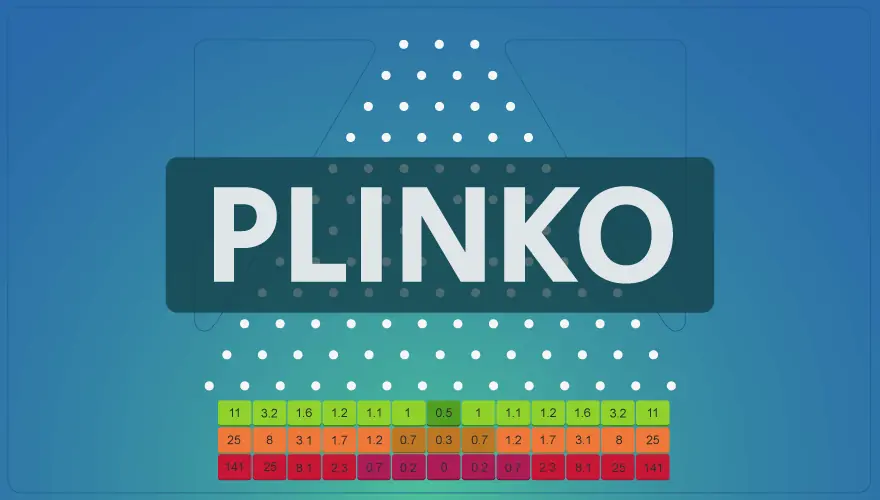
Plinko is a chance-based casino game built around a vertical board filled with pegs. The player chooses a stake, usually selects a risk setting, sometimes adjusts the number of rows, and then releases a ball from the top. As the ball hits peg after peg, it moves left or right until it lands in one of the multiplier slots at the bottom.
Its appeal is easy to understand. Unlike many online slots, Plinko does not hide its structure behind reels, paylines, symbols, or layered bonus systems. The entire event unfolds in front of you. You can watch the ball travel, react to every bounce, and anticipate the final result in real time. That visual transparency gives the game an immediate hook.
But visibility should not be confused with control. One of the most important things to understand about Powerplay casino Plinko is that the game feels open and readable, while the actual outcome remains fully chance-driven. That contrast is part of its attraction. You see everything, yet you influence very little beyond the initial setup.
There is also a practical reason Plinko became so noticeable across modern casino platforms. It compresses suspense into a very short cycle. A slot spin can be fast, but it often depends on symbol evaluation and post-spin animations. In Plinko, the drama is concentrated into one falling path. The result arrives quickly, but not instantly. That tiny delay matters. It creates anticipation without forcing a long wait.
One observation I keep returning to is this: Plinko often feels more “honest” than it really is. Because the ball is visible, players sometimes believe they are seeing probability in action in a more intuitive way than with reels. In reality, they are mostly seeing randomness dressed in a physical-looking form. That is not a criticism of the game. It is simply an important distinction for anyone trying to judge it clearly.
How the Plinko mechanic works in practice
The core mechanic is simple, but the practical meaning of each setting deserves attention. A typical Plinko session starts with three main choices:
- Bet size — the amount placed on each drop.
- Risk level — often low, medium, or high.
- Board depth or row count — available in some versions of the game.
Once those settings are in place, the ball is released. As it hits each peg, it deflects left or right until it reaches the bottom row of multiplier pockets. Central pockets usually carry lower multipliers and are hit more often. Edge pockets tend to offer the biggest possible returns, but they are also the least likely destinations.
This distribution is the backbone of the game. Plinko is not random in the sense that every bottom slot has the same chance of being hit. The structure usually favors the middle outcomes and makes the extreme multipliers rare. That is why the board often looks balanced but behaves unevenly. The most attractive values are visible, yet they are intentionally hard to reach.
| Element | What it does | Why it matters to the player |
|---|---|---|
| Bet size | Sets the value of each drop | Directly affects bankroll pressure during fast sessions |
| Risk level | Changes the payout spread | Can make results steadier or far more aggressive |
| Rows / board depth | Influences path complexity and multiplier structure | Often changes both hit distribution and session feel |
| Multiplier slots | Determine final return | Show where the rare high-end outcomes sit |
Risk level is where Plinko stops being merely simple and starts becoming strategically meaningful. On low risk, the multiplier map is flatter. Returns are usually less extreme, and the session may feel calmer, though not necessarily profitable. On high risk, the spread becomes much sharper. A large part of the board may return modest values or losses, while a few outer slots hold the kind of multipliers that can dramatically change one round or even a whole session.
This is why two players can open the same Plinko screen and walk away with completely different impressions. One sees a manageable, repetitive drop game. The other sees a highly swingy format that burns through balance quickly while dangling rare but memorable outcomes.
Why the game feels engaging and how its pace affects decision-making
The tempo of Plinko is one of its strongest design points. It is not as static as roulette, not as layered as blackjack guide at Powerplay Casino for Canadian players, and not as symbol-heavy as slots. Each round is short, visual, and easy to read. That creates a rhythm that many players find comfortable at first.
The problem is that “comfortable” can turn into “deceptively fast.” Because there is almost no learning curve after the first few rounds, players can begin dropping balls in quick succession without pausing to evaluate results. This is especially true when auto-play or rapid manual drops are available. A game that looks clean and low-effort can quietly become one of the faster bankroll-consuming formats on the platform.
That matters because Plinko does not build excitement through long bonus features. It builds it through repetition and near-miss psychology. Watching the ball drift close to a high multiplier before landing in a lower-value slot creates a very specific kind of tension. It is not the same as waiting for Powerplay Casino free spins help. It is more immediate and, for some players, more habit-forming.
A memorable detail about Plinko is that the ball’s path often feels personal, even though it is not. Players tend to react as if a specific bounce “almost went right.” That emotional response is part of what keeps the format engaging. The board gives randomness a visible route, and that route invites interpretation. In practical terms, this means the game can hold attention longer than its simple design suggests.
If you are trying Power play casino Plinko for the first time, this is one of the first things to monitor in yourself: not whether the rules are clear, but whether the speed of repetition starts to override your judgment about stake size and session length.
Understanding probability, risk levels, and possible outcomes
Players often ask whether there is a “best” way to play Plinko. The honest answer is that there is no winning formula in the conventional sense. What you can control is not the outcome, but the shape of your exposure to variance.
In practical terms, Plinko usually operates on a distribution where middle results are more common than edge results. This means the biggest multipliers are usually rare by design. High risk settings make that contrast stronger. Low risk settings smooth it out, but they do not remove the house edge or guarantee stable returns.
Here is the key point: risk level in Plinko is not just a cosmetic option. It fundamentally changes the player experience.
- Low risk usually means more clustered outcomes and fewer dramatic jumps.
- Medium risk tends to create a mixed profile, where modest returns appear regularly but meaningful spikes remain possible.
- High risk often concentrates value into rare top-end multipliers, making dry stretches more common.
For the player, this affects more than just mathematics. It changes mood. Low risk can feel repetitive and controlled, but sometimes flat. High risk can feel exciting and sharp, yet also frustrating when the board repeatedly lands in weak zones. Medium risk is often where new players start, not because it is objectively better, but because it reveals the game’s logic without pushing variance to the edge immediately.
| Risk setting | Typical session feel | Main trade-off |
|---|---|---|
| Low | Steadier, less dramatic | Fewer major spikes in return |
| Medium | Balanced, more varied | No guarantee of either stability or big upside |
| High | Sharp swings, stronger tension | Longer cold stretches can arrive quickly |
Another point that deserves clarity: a visible path does not make the outcome predictable. Some players instinctively search for trends after watching several drops. They may believe one side of the board is “due” or that a sequence of central landings increases the chance of an outer hit. That is not a reliable way to read the game. Plinko can create strong pattern illusions, and those illusions are part of the risk for impulsive players.
How risky Plinko really is and who will feel comfortable with it
I would not call Plinko universally high-risk, because that depends on settings. But I would call it variance-sensitive. The same game can feel mild or aggressive depending on how the board is configured. That flexibility is one of its strengths, but it also means players can underestimate how quickly the experience changes after one adjustment.
For cautious players, low or medium risk with modest stakes can make Plinko feel manageable. The rounds are short, the logic is easy to follow, and the bankroll impact is easier to track than in some bonus-heavy slots. For aggressive players, high risk is the obvious attraction. It offers the possibility of outsized multipliers, but usually at the cost of more frequent weak results.
Who is Plinko suitable for?
It fits players who enjoy:
- fast rounds with visible outcomes,
- simple controls instead of layered rules,
- clear stake management,
- variance-based tension without learning table strategy.
It may be a weaker fit for players who prefer:
- long-form bonus features,
- narrative slot design and symbol collection,
- decision-heavy table games,
- predictable pacing with fewer emotional spikes.
One of the most useful ways to think about Powerplay casino Plinko is this: it is not a substitute for every casino format. It is a specialized experience built around short suspense cycles. If that core loop appeals to you, the game can be very effective. If you need variety inside each round, it may start to feel narrow surprisingly fast.
What players should know about session rhythm before they start
The rhythm of a Plinko session matters almost as much as the payout structure. This is not a game where you usually sit back and wait for a feature to trigger. The engagement comes from repeated drops and quick feedback. That means your personal pace becomes part of the experience.
In my view, players should pay attention to three practical factors before starting:
First, stake-to-speed balance. A small bet can still add up quickly if the session becomes rapid. Because each round resolves in seconds, total exposure over ten minutes can be higher than many players expect.
Second, emotional response to streaks. Plinko can produce sequences that feel frustratingly flat, especially on higher risk settings. If you are the type of player who increases stakes after several underwhelming rounds, this format can become expensive very quickly.
Third, expectation management. The presence of large multipliers can distort perception. Players remember the headline numbers, but sessions are usually defined by the more common outcomes around the center of the board. The top-end values matter, but they should not be treated as normal results.
A useful habit is to decide in advance what kind of session you want. Are you testing the board with low pressure? Are you deliberately choosing a high-variance setup for a short burst? Or are you looking for a middle ground? Plinko responds well to that kind of self-discipline because the game itself does not slow you down.
How Plinko differs from slots and other casino games
At a glance, Plinko and slots may seem related. Both are chance-driven, easy to start, and often visually accessible. But once you spend time with them, the differences become obvious.
Slots are typically built around symbol combinations, reel behavior, bonus rounds, and hidden math that reveals itself over time. Plinko strips that away. There are no paylines to evaluate, no wild symbols to track, and usually no feature layer to wait for. The entire proposition is compressed into one visible event and one final multiplier.
Compared with Powerplay Casino roulette guide for players comparing casino options, Plinko is more animated and psychologically expressive. Compared with blackjack, it requires no strategic decisions after setup. Compared with crash-style games, it offers less direct timing input from the player but a more tactile visual payoff. In that sense, it occupies its own space: simple to enter, but highly dependent on how much variance you are willing to tolerate.
Here is the practical distinction that matters most: slots often hide complexity behind simple controls, while Plinko shows simplicity on the surface but hides intensity in its distribution model. That is why some players who find slots overwhelming actually prefer Plinko, while others miss the depth and variety that slots provide.
Practical strengths and weaker points of the format
No serious review of Plinko should treat it as flawless just because it is easy to understand. The format has clear strengths, but it also has limitations that become obvious after longer sessions.
Main strengths:
- Immediate clarity. You understand the premise almost instantly.
- Fast engagement. The game creates suspense without long setup or complex rules.
- Adjustable style. Risk settings can significantly change how the session feels.
- Visible outcome path. The ball drop gives a stronger sense of involvement than many abstract RNG formats.
Main limitations:
- Repetition can arrive early. The core loop is narrow by design.
- High-speed play can drain balance quietly. Simplicity makes overspending easier than some players expect.
- Pattern illusion is a real issue. The visible board encourages false reading of trends.
- Excitement depends heavily on variance tolerance. Players who dislike dry stretches may not enjoy higher-risk setups.
One of the more interesting contradictions in Plinko is that its biggest strength and biggest weakness are connected. The game removes clutter. That makes it accessible and elegant. But the same stripped-down structure means there is less variety to carry a long session if the underlying distribution is not giving you memorable results.
What to check before launching Powerplay casino Plinko
Before starting a real-money session, I would suggest looking at the game through a practical lens rather than a promotional one. Ask yourself a few simple questions:
- What risk level am I actually comfortable with?
- How many drops does my bankroll realistically cover at this stake?
- Am I expecting frequent moderate returns or chasing rare high multipliers?
- Will this format hold my attention, or do I usually prefer deeper slot structure?
If a demo mode is available, it is worth using briefly, not because it predicts future results, but because it helps you feel the pacing. In Plinko, pacing is not a side detail. It is part of the game’s identity. A player who enjoys the rhythm in demo is more likely to appreciate the real-money version. A player who feels bored or overstimulated after a short trial has learned something useful before spending anything.
For Canadian players browsing Powerplay casino, that practical test matters more than hype. Plinko is easy to launch, but not every easy-to-launch game is a natural fit for every playing style.
Final verdict: is Powerplay casino Plinko worth trying?
Powerplay casino Plinko offers a very specific type of casino experience: quick rounds, visible randomness, adjustable variance, and a surprisingly strong sense of tension for such a simple-looking format. It does not rely on elaborate themes or layered bonus systems. Its appeal comes from directness. You place a bet, drop the ball, and watch the outcome unfold in seconds.
That directness is the game’s biggest advantage. It makes Plinko easy to understand, easy to test, and easy to tailor through risk settings. For players who like short suspense cycles and clear visual feedback, it can be a strong fit. It is also one of the cleaner examples of a game where setup choices genuinely affect the feel of the session.
The caution point is just as clear. Plinko can look harmless because the interface is minimal and the rules are obvious. In reality, the combination of speed, variance, and visible near-miss tension can make it more intense than it first appears. High risk settings, in particular, are not just “more exciting.” They can produce long stretches of weak outcomes before a meaningful hit appears, if it appears at all.
My overall view is straightforward. Plinko is worth trying if you want a casino game that is simple to read but not emotionally flat, and if you are comfortable with the fact that its real character is shaped by variance rather than by features. It suits players who enjoy fast decision-light sessions and who can manage bankroll discipline on their own. It may not suit players who want richer structure, longer bonus arcs, or a more strategic style of play.
In short, Power play casino Plinko is not just a trendy drop game. It is a compact variance-driven format with a clean surface and a sharper edge underneath. That is exactly why some players will keep coming back to it, and why others will be better served by a different type of casino game.
FAQ
What is the fastest way to start a Plinko round?
Select your stake and press the Drop button to launch the ball.
On the Powerplay mobile experience, how is Plinko launched quickly?
Open the mobile version or the casino app, then go to the game lobby. Select Plinko from the games list and confirm the stake field before dropping the ball. Switching devices is fine, but the most recent real-money settings should be rechecked after sign-in.
How does casino login affect Plinko—does it change the game outcomes?
Login mainly changes account funds and permitted bet settings.